
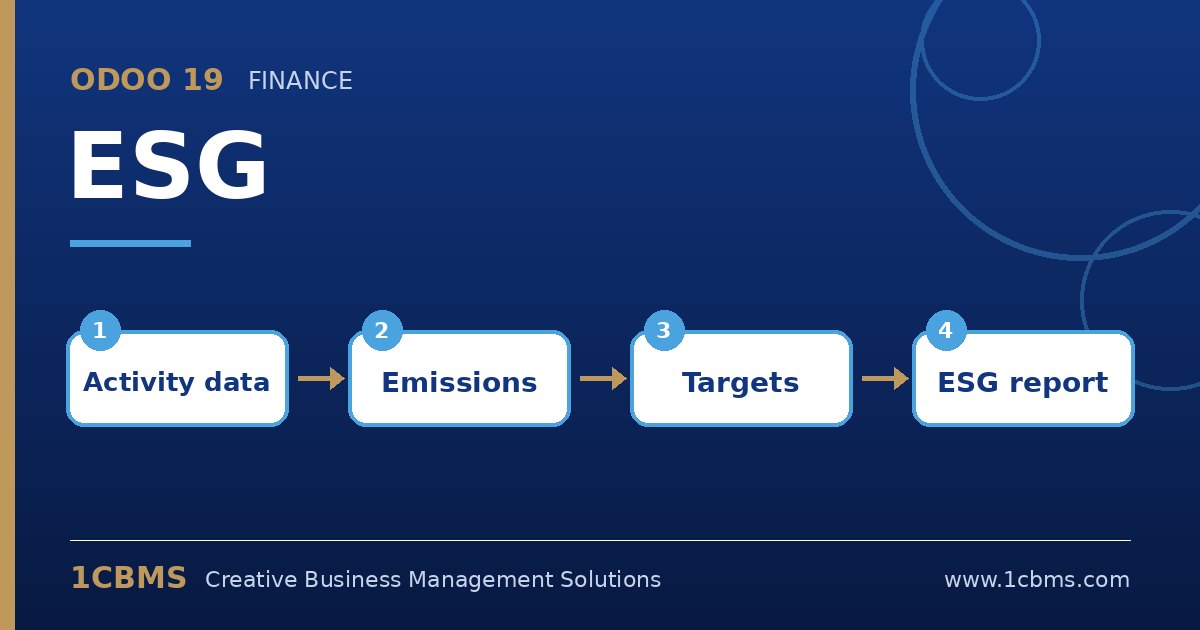
Sustainability reporting is moving from a nice to have to a buyer and lender requirement, especially for exporters. The Odoo 19 ESG app (Enterprise) helps by reusing data you already record in Odoo, such as accounting entries and employee information, instead of building a separate spreadsheet each year.
Most asked topics
- Emission factors: users ask where the carbon numbers come from, and the app relies on emission factors that you assign to the activities you record.
- Linking to accounting: finance teams want emissions calculated from purchases and expenses, which is done by connecting emission factors to journal items through assignment rules.
- Manual data: companies ask how to add activities not found in accounting, such as fuel measured in litres, which can be recorded as other emissions.
- Social indicators: HR asks whether gender parity and pay gap figures can be reported, which the app derives from employee data.
- Reports: management wants a single view of the footprint by scope and source, available from the app's reporting dashboards.
Practical setup tips
- Start with the few categories that drive most of your footprint, such as electricity, fuel and freight, before mapping everything.
- Review your chart of accounts and product categories, because clean source data produces reliable emission figures.
- Document which factors you used and why, so auditors and customers can follow the calculation.
ESG reporting is most credible when it is built on the same data as your financial statements. If you would like help configuring the Odoo 19 ESG app or training your team on it, 1CBMS can set it up around your real processes as part of an Odoo 19 implementation in Egypt, Iraq or the wider region.